How AI is changing hiring in 2026, and how to use it without losing the human touch
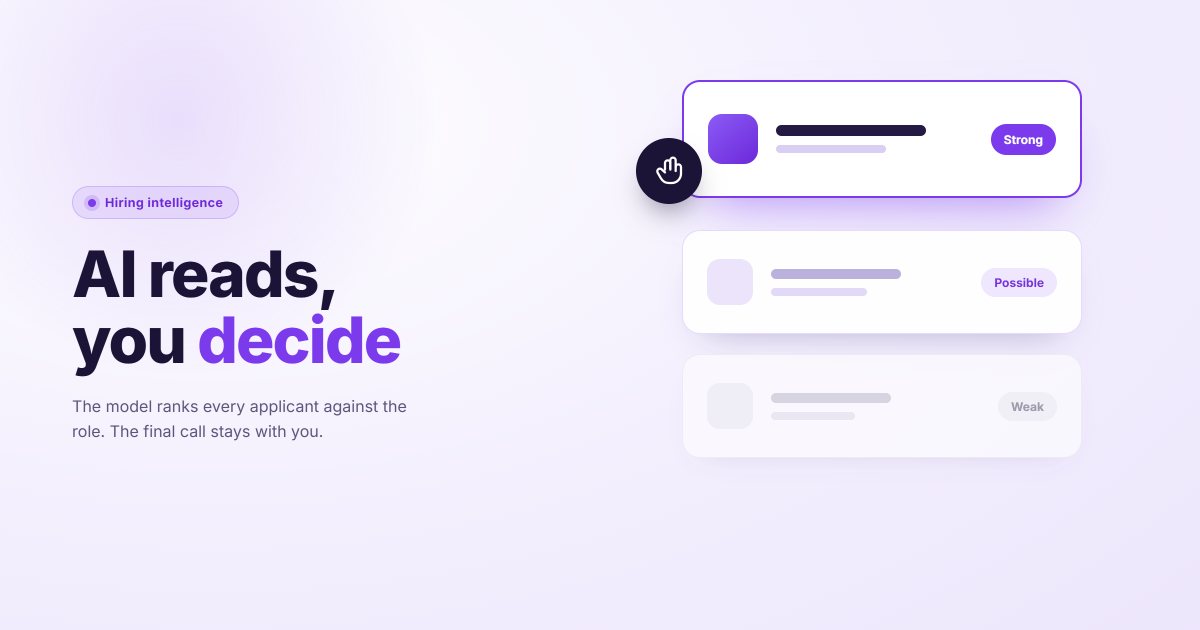
8 min read · July 2026. AI reads and ranks every applicant now. Here is what it is genuinely good at, the one thing it should never do alone, and how to hire well with it.
Hiring has changed more in the last two years than in the previous ten, and the change is not slowing down. Artificial intelligence has moved from a novelty in the recruiter toolkit to the layer that most hiring now runs on. If you hire people, and especially if you hire at volume across borders, understanding how AI is reshaping the process is no longer optional. It is the difference between a team that spends its days reading CVs and a team that spends its days talking to the right candidates.
This article looks at what AI is actually doing in recruitment today, what it is genuinely good at, the one thing it should never be trusted to do alone, and how a portal built for this moment helps you hire faster and fairer, particularly along the busy India to Gulf corridor.
AI is no longer coming to hiring, it is already running most of it
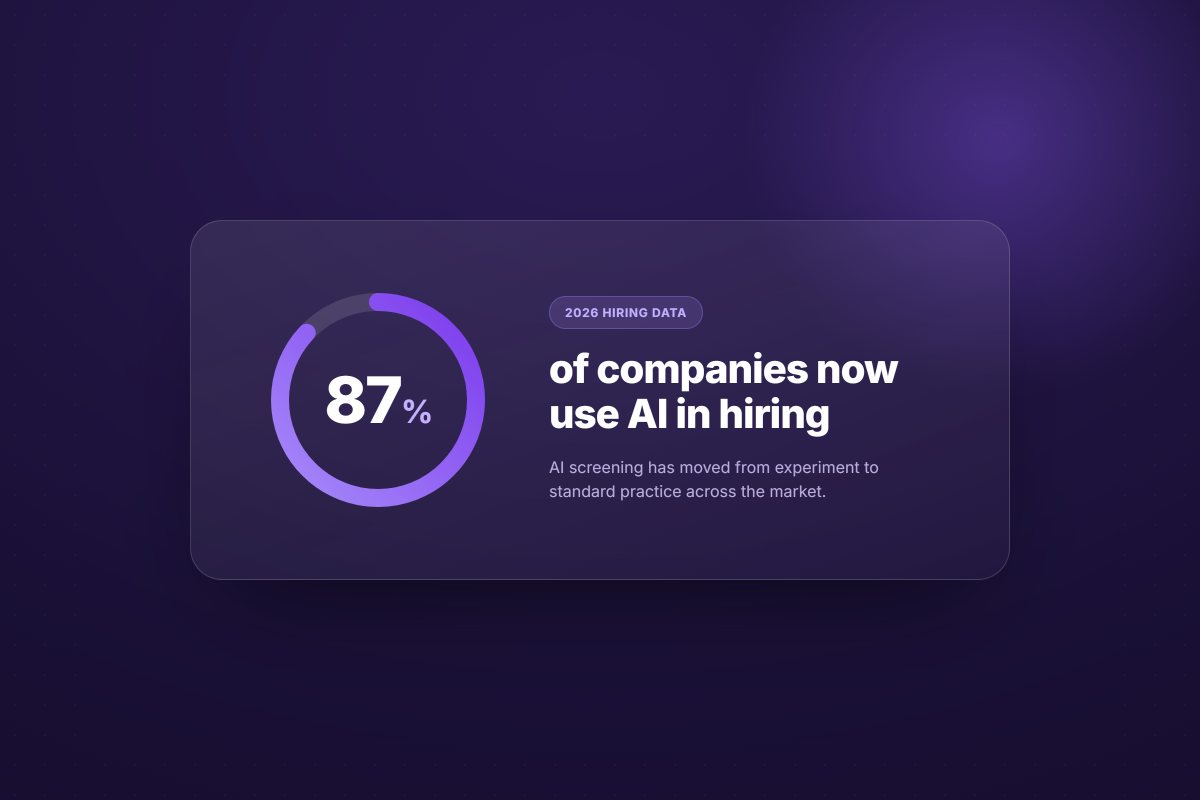
The adoption is not a forecast, it is the present. Around 87 percent of companies now use AI somewhere in their hiring process, and about 65 percent of recruiters have implemented AI tools directly. Among the people making hiring decisions, roughly 44 percent have started using AI for recruiting. The reason is not hype, it is time. More than 86 percent of recruiters say AI makes the hiring process faster, and around 67 percent name time savings as the single biggest advantage. On the cost side, AI can cut the cost of a hire by close to 30 percent.
The market reflects the same story. AI recruitment tooling was worth around 704 million dollars in 2025 and is projected to pass 1.1 billion by 2032. That growth is being paid for by employers who have found that AI does the heavy, repetitive part of hiring, reading and ranking, faster and more consistently than a human working through a stack of CVs late in the day.
For a recruiter, the practical meaning is simple. The work is shifting away from screening and toward judgment. The machine reads everyone. You decide who matters.
What AI is genuinely good at in recruitment
AI earns its place in a few specific parts of the process, and it is worth being precise about them.
It reads every applicant, not just the first twenty. A human screening a large pool gets tired, and the last CVs of the day never get the attention the first ones did. A model reads the hundredth applicant with the same care as the first. For high volume roles, this alone changes the quality of who reaches the shortlist.
It scores fit against the actual role. Good AI screening does not just search for a word, it weighs a candidate's real experience against what the job needs and produces a ranked view, strong, possible, or weak, with reasons. That turns a pile of CVs into a prioritised list, so a recruiter starts with the people most worth their time.
It removes the dead work. Scheduling, first pass ranking, drafting outreach, tracking who is where in the pipeline. These are the tasks that eat a recruiter's week and add no judgment. Handing them to software is where the time savings actually come from.
It makes screening more consistent. A tired human applies different standards at nine in the morning and six in the evening. A model applies the same standard to everyone, which, used carefully, can make the first cut fairer rather than less fair.
The one thing AI should never do alone
Here is the nuance most vendors skip, and it matters. Candidates do not trust AI to decide their future, and they are right to be cautious. Around 66 percent of people say they would avoid applying for a job if AI made the hiring decisions, and about 71 percent oppose letting AI make the final call. Push AI too far, into rejecting or selecting people with no human involved, and you do not just risk unfair outcomes, you shrink your own applicant pool, because good people walk away.
The winning model in 2026 is not AI instead of recruiters. It is AI doing the reading and ranking, and a human making the decision. The machine hands you a clear, reasoned shortlist. You bring the judgment, the context, and the conversation that no model can have. Used this way, AI gives you back the hours you used to lose to screening and lets you spend them where hiring is actually won, with the people.
Why this matters most in the India to Gulf corridor
Nowhere is the screening burden heavier than in cross border hiring between India and the Gulf. In 2026, employers across Dubai, Abu Dhabi, Qatar, and Saudi Arabia are actively recruiting Indian professionals across construction and infrastructure, engineering, logistics, and hospitality, from engineers and project managers to skilled trades and supervisors. These roles pull enormous applicant pools, often from several countries at once.
That volume is exactly the situation where manual screening breaks down and where AI screening pays for itself fastest. A recruiter hiring for a Gulf project cannot read a thousand CVs well by hand, but a model can read all thousand, score each against the role, and surface the strongest so the recruiter starts with a shortlist instead of a mountain. The corridor that most needs speed is also the one where AI screening delivers the most.
How the CVPassport HR portal is built for this
CVPassport was designed around the model that actually works, AI does the reading, the recruiter does the deciding.
Every applicant is evaluated, not skimmed. The portal reads what each candidate actually wrote in their CV, weighs it against your specific role, and returns a verdict with the reasons behind it, so you know who fits before you read a single line. It is not a keyword match, it is a real reading of the person against the job.
Your strongest candidates rise to the top. Applicants are scored and ranked as strong, possible, or weak, so your screening time drops and you begin with the people most worth a conversation rather than working through the pile in the order they arrived.
The interview is handled too. The portal writes interview questions drawn from each candidate's own CV, with a sense of what a good answer sounds like, so any interviewer on your team can run a sharp, fair conversation. A visual pipeline moves candidates forward, and your outreach can go out on the channels people actually answer.
And it keeps you in the seat that matters. CVPassport scores and ranks, but you decide. That is the model candidates trust and the model that protects your applicant pool while still giving you the speed.
Built for the corridor, it handles India to Gulf hiring as a first class case rather than an afterthought, with scheduling that respects both time zones and candidate presentation that recruiters on both sides recognise.
Start a 30 day free trial of the HR portal →
What to look for in any AI hiring tool
If you are weighing options, judge them on three things. Does it read the real CV and reason about it, or does it just match keywords. Does it keep a human in the final decision, or does it quietly automate people out with no oversight. And can it show you the reasons behind its verdict, so you can trust it and defend it. A tool that reads deeply, keeps you deciding, and explains itself is one you can build a hiring process on. One that fails any of the three is a risk dressed as a shortcut.
The takeaway
AI has already changed hiring, and the change is good for the recruiters who use it well. It takes the reading, the ranking, and the busywork off your plate and hands you back the hours to do the part only a person can do, judge, connect, and choose. The teams that win in 2026 are not the ones that hand hiring to a machine, they are the ones that let the machine clear the path so the human can walk it faster.
If you hire from India for the Gulf, or you simply want to stop losing your week to screening, start a 30 day free trial of the CVPassport HR portal. Post a role, watch every applicant get read and ranked, and see how much faster hiring feels when the reading is already done.